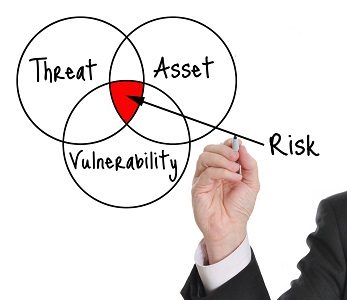
Showing posts with label Cybersecurity. Show all posts

Monday, January 31, 2022

Cybersecurity In 2022: A Fresh Look At Some Alarming Stats


The year 2021 was very difficult for cybersecurity in many areas. Solar Winds, Colonial Pipeline, and many other breaches that had a significant economic and security-related impact were some of the most prominent. Ransomware attacked many small and medium-sized businesses with a furious vengeance. Worst of all was the fact that adversaries exploited security vulnerabilities in supply chains and critical infrastructure at higher rates than ever before. We are only beginning to see some of the trends that will be prevalent in 2022, even though it is only January.

Cybersecurity and business

In the past two years, there has been a shift in work from traditional offices to remote or hybrid locations. Statistics show that hackers welcomed this shift and took advantage the security gaps and vulnerabilities in businesses.

Based on the Allianz Risk Barometer, cyber perils will be the greatest concern for companies worldwide in 2022. Data breaches, ransomware attacks, and major IT outages are more of a concern to companies than disruptions in business supply chains or natural disasters, which all have impacted firms heavily over the past year.

A new study by Positive Technologies on pentesting projects, which was conducted among financial institutions, fuel and energy organizations, government bodies, industrial companies, IT companies, and other sectors, has revealed that there are many findings. An external attacker can penetrate an organization’s network perimeter to gain access the local network resources. This is true in 93% of cases.

In 2021, 50% more cyberattacks were made on businesses.

New data shows that cyberattack attempts rose to an all-time high in the fourth quarter of 2021 partly because Log4j. In 2021, the largest number of attacks on cyberattacks was sustained by research and education sectors. Government/military, communications and communications were next. Source: Check Point Software

Cybersecurity for Small and Medium Sized Business

Many large companies were hacked, but small and medium-sized businesses were easier targets because they lack the security expertise and resources.

Trends and statistics on cyber attacks in 2022
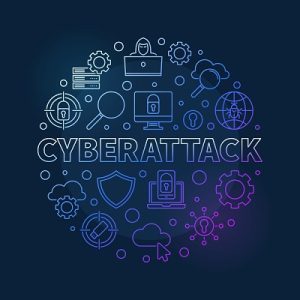
cyberattack-small-business-300x300.jpgCyberattacks on businesses of all sizes, but especially small- to medium-sized, are becoming more frequent and targeted. Accenture’s Cost of Cybercrime Study found that 43% of cyberattacks are directed at small businesses. However, only 14% of those targeted are equipped to defend themselves.

Cyberattacks can disrupt normal operations and cause significant damage to IT infrastructure and assets that may be difficult to repair without sufficient resources or budget.

This is a problem for small businesses that makes it difficult to protect themselves. Ponemon Institute’s State of Cybersecurity Report reports that cyberattacks have been reported by small and medium-sized businesses around the world.

  • Insufficient security measures: 45% of respondents say their systems are not effective in mitigating attacks.
  • Sixty-six percent of victims have been the victim of a cyberattack in the last 12 months.
  • Background of attacks: 69% believe that cyber attacks have become more targeted.

These are the most common attacks on small businesses:

  • Phishing/Social Engineering: 57%
  • Compromised/Stolen Devices: 33%
  • Credential theft: 30%

For understanding cyber threats and vulnerabilities, as well as the implications of successful attacks on cyber security, it is important to keep up-to-date with current cyber-attack statistics.

  • 43% of data breaches are small- and medium-sized businesses.
  • 61% of SMBs reported at least one cyberattack in the past year, so if you are still unsure about your small business being a victim, think again.
  • A CISCO benchmark study found that 40% of small businesses were affected by a serious cyber attack and had to go offline for at least eight hours. This downtime is a significant cost in a security breach.
  • Ransomware was not one of the top cyber threats small businesses identified in the study. Ransomware is a concern for a large percentage of Managed Service Providers (MSP).
  • 30% of small businesses consider Phishing attacks the greatest cyber threat.
  • 83% of small- and medium-sized companies aren’t financially ready to recover from cyber attacks.

Despite these staggering statistics, 91% of small business owners have not purchased cyber liability insurance or consulted with an IT Support company such as  Adtek Advanced Technologies. This demonstrates how unprepared small businesses are to deal security breaches.

Ransomware:
Ransomware-meme-300x300.jpg

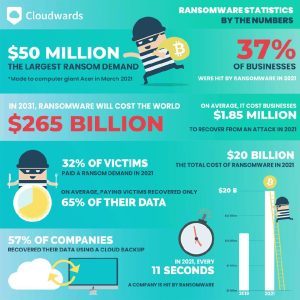
Ransomware by the Numbers CLOUDWARDS

Ransomware is a cyber-weapon that hackers prefer to use. Although it has been around for decades now, ransomware was first introduced in 2021. Ransomware is a popular way to steal data and hostage it for payment in cryptocurrencies.

Five Key Ransomware Statistics

  1. In 2021, ransomware was estimated to have cost the world $20 Billion. This number is expected rise to $265 Billion by 2031.
  2. Ransomware affected 37 percent of all organizations and businesses in 2021.
  3. In 2021, businesses spent $1.85 million to recover from ransomware attacks.
  4. 32 percent of ransomware victims pay ransom but only 65 percent get their data back.
  5. Only 57% of businesses have been able to recover their data from a backup.

Ransomware is rampant, which is a sobering fact. Ransomware will be a constant threat due to the availability of soft targets. Our lives are impacted by an ever-increasingly connected world. Every industry and every organization will need to manage and protect data from now on.

Understanding and being aware of ransomware can help to address many cybersecurity problems. The emergence of cybersecurity tools, protocols, and mitigation tools can help to limit the growing trend in ransomware attacks. It is time to take proactive measures to secure networks, devices and systems and to make them more resilient.

Cyber Statistics You Need to Know For 2022

cyber-stastics-300x160.jpgPhishing Attacks. Phishing attacks were linked to 36% breaches, an increase in 11% which could partly be attributed to COVID-19 pandemic. As you might expect, threat actors are known to modify their phishing campaigns according to what is happening in the news. (Verizon 2021 Data Breach Investigations report)

Data Breach Cost: The 2021 data breach cost was the highest in 17 years. It rose from US$3.86 to US$4.24 millions annually. (IBM Cost of a Data Breach Report 2021

Ransomware Payments: Cryptocurrency is the preferred payment method of cybercriminals, particularly when it comes to ransomware. Ransomware payouts for the 10 most popular ransomware variants could be responsible for as much as US$5.2 Billion in outgoing Bitcoin transactions. (FinCEN report on Ransomware Trends In Bank Secrecy Act Data).

DDoS attacks: Due to the COVID-19 pandemic, the number of distributed denials-of-service (DDoS), attacks has been increasing. 2020 saw over 10 million attacks, which is 1.6 million more than in the previous year. (ENISA Threat Landscape 2021).

If this article has got you thinking – good. Small business are at risk but there is a solution. Call Adtek Advanced Technologies today for a complete review of network and suggestions on how you can be secure in 2022. Don’t put this off until after an attack! Be proactive – call now.

Adtek Advanced Technologies
Rock Hill, SC 29730
(803) 902-3111

Dillon, SC 29536
843-627-3079

Home

Friday, January 21, 2022

Beyond The Firewall: Protect Yourself Against Cyber Attacks


cyberattack-300x188.jpgCyberattacks can devastate your company. Cybercriminals and hackers can outsmart security systems and gain access confidential information of customers and employees, no matter how well-defended they may be.

T-Mobile, Facebook, and the California Department of Motor Vehicles are just a few of the organizations that have been affected by data breaches in 2021. Your company must increase its security focus if global corporations or government agencies are at high risk of cybercrime.

Modern security threats are making traditional defenses such as antivirus software and firewalls as a stand-alone defense ineffective. Let’s take a look at these threats, and discuss the warning signs of a breach as well as best practices to protect yourself against them.

Popular Security Threats

A Trojan Horse Threat

trojan-malware-300x200.jpgTrojan horse  can be a malware or virus. This is a little misleading. Viruses can spread by themselves, but the execution of Trojan malware requires that the victim click or open the seemingly harmless link. This allows the malware to infect the system. There are many types of Trojan malware that can be used to accomplish different goals. They can open a backdoor to your system, steal emails addresses, and install ransomware.

Rootkits

Rootkits work in a similar way to Trojans, but they are designed to stay on your computer secretly. Rootkits can be installed in the background and allow hackers to remotely control your computer, disable security measures, set up key trackers, steal sensitive data, and even take over your computer.

Spear Phishing

While most people are familiar with phishing techniques, spear phishing is more dangerous and sophisticated. While traditional phishing scams target large numbers of people, spear phishing targets a particular target. They use social media to research your company structure to pretend to be a member of your team. This allows them to gain the trust of the target, as well as credit card numbers and login credentials.

Malicious Email Attachments

Hackers use this tactic to send malware-infected emails to their victims disguised as PDFs and Excel tables. Voice memos are also used. The email’s body is designed to encourage the reader to open the attachment (“read the latest memo from the boss”), which will unleash the malware on your computer.

Drive-By Downloads

These codes are hidden on websites, sometimes in a benign way. They can cause malware or viruses to attach to your computer. This type of attack is able to gain access to your computer without the need for further action by its target. It is one of the most dangerous and unpredictable threats.

An Advanced Cyber Attack Signs

signs-cyberattack-300x200.jpgA 2020 IBM report found that it takes on average 228 days to detect a breach. It is impossible to imagine the amount of damage that could be done in just 228 days. Add on recovery time and it could take up to a year before you can get back to normal.

It is possible to not see a breach in your network immediately. Cyber attackers are smart and know how to conceal in plain sight to avoid detection. These attacks can be prevented by awareness and vigilance. Here are some warning signs to look out for:

Slow Network Connection

An increase in your connection speed could indicate that there has been a security breach and that malicious programs are running in the background. This could be caused by a hacker remotely controlling your computer.

Task Manager – Unfamiliar Programs

Task Manager should be your first port of call if you notice unusually slow connections. Your computer will heat up if it is being run by unknown programs that are not your knowledge. A denial-of service attack is when hackers flood your computer with untrue requests in an attempt to prevent actual work from happening.

Unusual Transactions

Are you seeing suspicious activity in your accounts? Even seemingly innocent payments and messages could indicate that someone has accessed your computer via the outside. Hackers will often try to make minor changes to your computer to check if you are paying attention, and then move on with larger attacks.

Unusual Password Behavior

Also, be aware if your passwords are being changed without you knowing or if you receive requests to reset passwords that you didn’t initiate. This could indicate that your system is being hacked and hackers are trying to gain further access.

Massive Data Sets Ready for Export

Hackers will use stolen data to compress and export it faster once they have access. A data breach is likely to occur if you see data in unfamiliar formats or groups.

Phishing emails targeted at specific targets

Spear phishing becomes much easier once hackers have access to your internal documents. You may have been unaware that you have seen more of these types of emails.

Increased Outgoing Emails

Hackers often use computers they have infiltrated in order to phish other computers within your network. If the attachments are from a trusted source within a company, people are more likely to open them.

Cyberattacks: How to protect yourself

ransomeware-300x200.jpgThese cyber threats will constantly be a threat to your computer systems. You can avoid them by raising awareness within your company and using the security tools available to you.

Training for employees

Advanced persistent threats can be detected early, so it is important to inform your employees about security breaches. Two-factor authentication and strong passwords are two benefits that you should inform your employees. Training your employees on advanced cyber threats is a great way to teach them what to look out for and to make sure they are aware of who should be notified in case there are any breaches.

Keep your systems up to date

These updates have been created to combat new cyberthreats as soon as they occur. You should not ignore a notification about an update. To fix vulnerabilities and keep your operating system running smoothly, you need to update it regularly.

Make the most of technology to your advantage

Security technology is continually evolving to counter new threats, just as hackers constantly find ways to undermine your defenses. Although it may seem like there is no way to avoid potential breaches, using new technology can prove to be extremely beneficial for your company. It is possible to encourage your employees to use password vaults, and to install malware detection. These are simple and affordable first steps. VPN firewalls offer more protection than older counterparts, as they include encryption. Prioritize the most valuable data to hackers as these will be the first areas targeted in an attack.

Technology can be an asset to your overall risk management plan. Adtek Advanced Technologies can assist you if you are unsure where to start. Adtek Advanced Technologies software makes it easy for your entire team to monitor cybersecurity risks across the company. It provides a seamless, integrated experience that allows users to share information in a single place. Adtek is compatible with a variety of frameworks. This will make it easy to use regardless of your field. To learn more about Adtek Advanced Technologies, schedule a demo today.

Adtek Advanced Technologies
Rock Hill, SC 29730
(803) 902-3111

Dillon, SC 29536
843-627-3079

Thursday, November 4, 2021

Six Steps to Follow After a Business Data Loss


A response strategy is the last thing that you need to worry about during a cybersecurity incident. This is why Incident Response plans (IR) are designed to prevent this exact situation. They provide a clear protocol to respond to cyberattacks and unauthorized software/hardware changes. The IR plan should be drafted if there are doubts as to the security, integrity, confidentiality or security of your business data. To ensure that your clients, employees, and business IP are protected, your IR plan should include both your legal and technical teams. These are the six most important incident response steps you should take if there is a security breach or another event.

6 Essential Steps to Respond to Cybersecurity Incidents

1. Prepare your systems for 24-hour responsiveness

Someone must be alert for an attack in order to be prepared. Adtek Advanced Technologies monitors threats 24 hours a day, including logs, track network and Office 365 threats. SOC and other related systems will alert members of your team in the event of a security event. A designated team should be established within your organization to assess and identify threats 24×7. They will be able to access sensitive applications and intellectual property during a cyberattack and can assist in the recovery process. Cyber attacks can be unpredictable. However, having a plan and a set of responders can help reduce the damage.

2. Identify the Cyber Threat

The earlier a threat can be identified, the better. Your IT team must know whether the threat is external or internal and what its success rate in evading existing defensive measures. Some important data points include:

  • The current status of the incident
  • Date/time at which the incident took place
  • Description of the incident (e.g. How it was detected and what happened
  • If known, the source/cause of incident – hostnames and IP addresses
  • Description of the affected resources – hostnames, IP addresses, type of system, and so on.

3. Escalate the Incident

cybersecurity-rock-hill-SC-300x198.jpgIt can be useful to create a framework for escalation in the event of system/data compromise. These priority levels can be used to identify the respondents and time frames for their response. They also provide methods of communication. These are just three examples of incident prioritization and the expectations around each:

High Priority

This level is for high-risk incidents that could cause severe damage to an organization. This includes data and system compromises, Direct Denial of Service attacks (DDoS), computer viruses, or other similar incidents. These threats require immediate intervention.

Medium Priority

This type of incident affects multiple data sources, where confidential data appears to be read, modified, destroyed, or altered by an unauthorized user. Examples of such incidents are malware outbreaks, attacks on specific servers, unauthorized scanning activity, and systems communicating with bad threats vectors. Medium priority events are not likely to cause business disruption if they are handled correctly.

Low Priority

This classification refers to alerts that are contained in a single or limited number of machines from a single data source. This could include system infections and malware alerts from user browsing activity. These incidents are considered “low priority” if they don’t appear to have any impact on confidential information.

4. Limit the damage

Your Incident Response Plan must include containment. There are many strategies to achieve this goal, depending on the threat. There are two main types of containment: short-term or long-term. A short-term containment could be as simple as blocking traffic from compromised servers or isolating the network device under attack. Your team might apply temporary patches to the targeted system. During the recovery stage, they may also build a new system.

5. Eliminate the Source

This is the best time to determine the source of the attack, eliminate malware, and create prevention cybersecurity strategies. If weak authentication was the entry point, then replacing it with multifactor authentication would be considered elimination. This stage builds on containment by eliminating threats identified from your network or endpoint of your application.

6. Recover your Operations

To prevent another incident from happening, systems are carefully restored to normal operation. This is when systems are restored to their original state before the incident. This stage is where backups are crucial. They will help your team restore your computing environment. Contact Adtek Advanced Technologies to learn more about how you can recover from a cybersecurity attack.

Adtek Advanced Technologies
1702 Hwy 301 North
Dillon, SC 29536
843-627-3079
https://adtekitservices.com

Rock Hill, SC 29730
(803) 902-3111

Monday, October 4, 2021

Top 5 Most Serious Cyber Security Threats Small Businesses Facing


Cybersecurity threats can be just as dangerous for small businesses as they are for large corporations. Small businesses often believe that security is possible through obscurity. This is a common misconception.

Attackers are automating more attacks and it is easier for them to attack hundreds or even thousands of small businesses simultaneously. Small businesses are often less secure, have a lower awareness of potential threats, and have less resources and time to invest in cybersecurity. Small businesses are often easier targets for hackers than larger organizations.

They are also lucrative targets. Even small businesses can manage large amounts of money or have access huge amounts of customer information that they must protect. Hackers can also use small businesses to target larger companies.

cyber-attack can be devastating for small businesses. According to a recent study, businesses with fewer than 500 employees are at risk of losing $2.5 million each attack. Small businesses can lose this much money to cyber-attacks.

Small businesses must be aware of these threats and know how to prevent them.

Top five cybersecurity threats that businesses face and how organizations can defend themselves against them.

1) Phishing attacks

Phishing attacks are the biggest and most serious threat to small businesses. They account for 90% of breaches in organizations, have grown by 65% over the past year, and are responsible for more than $12 billion in losses. Phishing is when an attacker pretends that they are a trusted contact and encourages users to click a malicious URL, download a malicious program, or gain access to confidential information or credentials.

In recent years, phishing attacks have become more sophisticated. Attackers are convincingly posing as legitimate business contacts. Business Email Compromise has seen a rise in sophistication. This involves bad actors using phishing campaigns to steal passwords to business email accounts from high-ranking executives and using these accounts to fraudulently ask for payments from employees.

Phishing attacks are very difficult to stop. They employ social engineering to target people within a company, not technological weaknesses. There are technological defenses against phishing attacks.

A strong Email Security Gateway such as a firewall can stop phishing emails reaching employees’ inboxes. For your business to be protected from phishing attacks, you will also need Post-Delivery Security. These solutions allow users and admins to report phishing email, and then administrators can delete them from all user mailboxes.

Security Awareness Training is the final layer of security that protects emails from phishing attacks. These solutions can be used to protect your employees. They can be trained to recognize phishing attacks, and then reported them.

2) Malware Attacks

Small businesses are also at risk from malware. It includes trojans, viruses, and other cyber threats. Malicious code is code hackers use to access networks and steal or destroy computer data. Malware is usually spread via malicious website downloads, spam email attachments or by connecting to infected devices or machines.

Small businesses are especially vulnerable to these attacks, as they can cause devices to be disabled. This requires costly repairs or replacements. These attacks can also open up a way for attackers to gain access to data, which could put employees and customers at risk. Because it saves time and costs, small businesses are more inclined to hire employees who use their own devices to work. However, this increases the risk of a malware attack as personal devices are more susceptible to malicious downloads.

Strong technological defenses can help businesses prevent malware attacks. Endpoint Protection provides protection against malware downloads, and admins have a central control panel that allows them to manage all devices and make sure security is maintained. Web Security is important as it prevents users from downloading malicious software and visiting malicious websites.

Expert Insights allows you to read user reviews about the best Endpoint Protection and Web Security vendors.

3) Ransomware

ransomeware-300x200.jpgRansomware is a cyber-attack that affects thousands of businesses each year. Ransomware has become more popular in recent years, since they are one the most lucrative types of cyber-attacks. Ransomware encrypts company data so it can’t be accessed or used. The ransom is then paid by the company to unlock the data. Businesses are faced with two options: pay ransom or risk losing large amounts of money and/or crippling their services due to data loss.

These types of attacks are particularly dangerous for small businesses. With an average ransom demand for $116,000., 71% of ransomware attacks on small businesses occurred in 2020. Smaller businesses are more likely to pay ransom because their data is not always backed up. They need to get back to normal as soon as possible. This type of attack is especially damaging to the healthcare sector, which can lock patient records and appointment times, leading to businesses having to close down if a ransom is not paid.

cloud backup solution should be considered by businesses. These solutions protect company data in the cloud and help to prevent data loss. There are many options for data backup available, so it is important to find the best one for your company.

Implementing data backup and recovery means that organizations can recover their data quickly without the need to pay ransoms or lose productivity in the event of ransomware attacks. This is a significant step in improving cyber-resilience.

4) Weak Passwords

Small businesses are also at risk from employees who use weak passwords or can be easily guess. Many small businesses use several cloud-based services that require different accounts. These services can often contain financial and sensitive information. This data can be compromised if passwords are easily guessable or used for multiple accounts.

Because employees use weak passwords, small businesses are more at risk of being compromised. According to a recent study, 19% of enterprise professionals share passwords between accounts and use passwords that are easily guessable.

Business Password Management can be used to ensure employees use strong passwords. These platforms allow employees to manage all of their passwords, which can be difficult to crack. Multi-Factor authentication technologies should be considered by businesses. Multi-Factor authentication technologies allow users to access business accounts with more than a password. Multiple verification steps are required, including a mobile passcode. Even if an attacker correctly guesses a password, these security controls prevent them from accessing company accounts.

5) Insider Threats

insider-threat-300x200.jpgThe insider threat is the last major threat to small businesses. Insider threats are risks to small businesses that are caused by employees, former employees or business contractors. These actors have access to critical information about your company and can cause harm through greed, malice, ignorance, or carelessness. According to a 2017 Verizon report, 25% of 2017 breaches were caused by insider threats.

This is a growing problem that can pose a risk to customers and employees, and cause financial loss for the company. Insider threats in small businesses are increasing as more employees have access multiple accounts that contain more data. Research shows that 62% have access to accounts they don’t really need.

Small businesses must have strong security awareness in order to prevent insider threats. This will prevent insider threats from being caused by ignorance and allow employees to recognize when an attacker is trying to compromise company data.

Summary

Small businesses are facing a variety of threats at the moment. Businesses can protect themselves against these threats by having a complete set of security tools. Security Awareness Training is also a great way to make sure that employees are well-informed about security threats and how they can be avoided.

Adtek Advanced Technologies has the tools and experts to keep you small business safe from cyber attacks. Contact us today for s complete analysis of your vulnerability.

Adtek Advanced Technologies
Rock Hill, SC 29730
(803) 902-3111

Dillon, SC 29536
843-627-3079
https://adtekitservices.com

Security Systems and Fiber Optics

Fiber optics advantages , which includes high bandwidth, low loss, and immunity from interference by electrical devices, are more important ...