Wednesday, December 8, 2021

All You Need To Know Concerning Network Cabling


How to conceal cabling and network installation.

You don’t have to be a genius in order to understand network cabling. But do you know the basics of networking?

The use of cables in networks allows information to be connected together. This is usually done between computers, routers and storage area networks. These cables allow us to access the internet and transfer data.

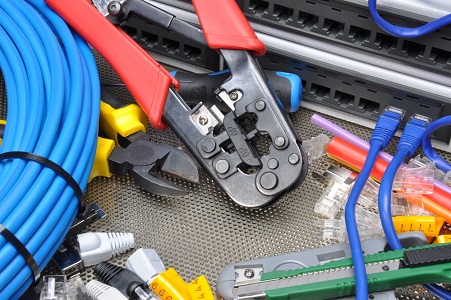
There are many types of network cables. The type of system being used will determine which one is best. Twisted pair cables are the most commonly used type of communication cable for networking. These are typically used for local area networks, i.e. Offices and schools as well as commercial locations can use twisted pair cables.

What does cabling mean in networking?

The internet is connected to us by networks through cabling. This is crucial in areas where local networks are active, such as schools, hospitals and police stations.

These cables are, in the simplest terms, a way to connect to the Internet, even without having to plug them directly into your devices.

What are the differences between cabling types?

What are the different types of cables? These are the most popular network types:

Cat5e cable can be used to connect computers via twisted pair cables. This cable is suitable for most Ethernet connections and can transmit up to 100MHz.

Cat6 cable is a twisted-pair cable that can be used for ethernet or other networks. However, it is compatible backwards with cat5e. This cable allows for more specific specifications and can be used to create more complicated network setups.

We will be discussing the Fiber optic cable as the final cable. This is the cable that you are most familiar with. Fiber optic cables are made up of strands made of glass fibers that can be used for high-speed, high-performance, long-distance networking or telecommunications. These cables are the fastest available in the industry and are used in most third world countries as a standard network cable.

Sometimes, cable wires can be messy. How can you hide cable wiring?

There are many ways to conceal various cables from your network. There are many options to hide extra-long cables for network setup or just your home.

Cable ties can be used to attach any loose cables. This will hide any untidy cables, keep the cable tidy, and remove any trip hazards. We recommend that you either build the cable into a storage or cabinet (especially if it is a network), or run the entire length of the room around the back. You’ll be glad you did! ).

Network cable installation

Adtek Advanced Technologies can provide a professional and affordable solution for all your business cabling requirements. No matter if you need a complete new infrastructure or a few minor tweaks, don’t hesitate to contact us.

People also asked

What do you know about network cabling?
Image result for what you need to know about network cabling
In other words, Network Cabling is the medium through which information usually moves from one network device to another. There are several types of cable which are commonly used with LANs. In some cases, a network will utilize only one type of cable, other networks will use a variety of cable types.

Benefits Of A Professional Network Installation

Why is it important to know the different network cables?
Different types of network cable are used for different distances and different applications. It is important to understand that the type of cable used can affect the network connectivity and speed. So it is essential to use the right cable for the specific application.

Protect Your Fiber Optic Network From Hackers

Adtek Advanced Technologies
Rock Hill, SC 29730
(803) 902-3111

Dillon, SC 29536
843-627-3079

Thursday, December 2, 2021

Benefits of Professional Network Installation York SC


A strong and reliable network is an essential part of any company that relies on the internet to deliver their products or services. Slow internet connections should not cause your business to lose time. Even if you attempt to install the network yourself, professional help is still beneficial.

Professional Network Installation offers many benefits

Network installation is designed to create a reliable, fast network that will allow your company to conduct business. This also helps ensure that your network infrastructure remains strong. This will depend on your needs. What kind of network do you need? What number of devices and systems are you going to be interconnecting?

These are the five benefits of professional network installation.

Time is saved

Although you can technically install a network yourself, you will likely spend more time if you get professional assistance. You might need to follow certain steps. You can have many unexpected problems solved faster by a professional than you. To save yourself from frustration and confusion, ask for assistance.

Professionals Provide Optimal Speed

An IT professional can also optimize your network’s speed. Internet connection speeds have significantly improved over the past decade. Statista reported that the average Internet speed in the United States for the first quarter 2017 was 18.75 megabits/sec (Mbps). This is compared to the 3.87Mbps recorded during the first quarter of 2010. Business Insider’s April 2020 Report states that you must have a minimum 12 Mbps download speed in order to surf the Internet safely. Experts can provide services at much higher speeds due to their knowledge of how different IT systems work together.

Initial Report on Security & Risk

An IT professional will be able to install your network. An IT specialist can give you a report which will help you assess the risks associated with setting up a network. This professional may use a score and chart to assess your risk level and to analyze any external vulnerabilities to data breaches or other issues.

Reduce your business’s costs

Although it might seem expensive to hire a professional to install your network, the investment will pay off over time. This is partly because IT professionals are experts in choosing the right resources for network installation. These people are up-to-date on technological advancements.

Tailor networks to your business’s specific needs

Every organization has different goals and needs. These goals and needs should be met by the network installation. If you have offices around the world, it may be beneficial to connect multiple networks in order to share information. Routers can help link several networks.

Speak to an IT service provider who is experienced in managed IT services

Adtek Advanced Technologies York SC can help you install a network professionally. We are committed to providing the most advanced and innovative IT solutions today. To tailor our services to our customers’ needs and challenges, we aim to fully understand them.

Adtek’s staff are highly qualified and have extensive knowledge of top OEMs as also ISVs. Because of the many options available, we are confident in our choice. We offer detailed reports about network installation to help you make sure your network is secure. no risks). Adtek can audit your expenses and provide carrier services. Our clients can outsource their carrier management and circuit provisioning, so they are not responsible for these tasks. We handle expenses such as Internet, SDWan, and MPLS.

We will save your company money if we can. Adtek Advanced Technologies Rock Hill can be reached at 843-627-3079 for more information or to make an appointment.

Why your company should deploy network monitoring

network-monitoring-york-sc-300x200.jpgIn the past two years there has been an abrupt shift in how businesses provide and protect their networks services. Businesses had to quickly deal with a complex network and support remote workers. A functioning network is the backbone for any business. It should be monitored continuously to ensure that reliability, staff performance and security are maintained.

What is Network Infrastructure?

Let’s begin with the basics. The network infrastructure of your company includes all hardware and software resources that make up your network. This includes devices such as routers, switches and wifi, firewalls, servers and other software resources that require careful configuration and maintenance.

  • Your routers connect to the internet through your private network.
  • Network cabling and switches connect devices within your private network, such as printers and computers, to allow them all to communicate with one another.
  • Wifi access point connects your phones, tablets, and laptops to the rest of network.
  • Firewalls can protect your private network by preventing untrusted traffic from reaching it.
  • Servers house applications, databases, or data files, which are delivered to users via a network.

There are also all your printers, PCs, phones, tablets, and smartphones. Proactive network monitoring is the best way to make sure that they all run efficiently.

What is Network Monitoring?

Network monitoring involves continuous analysis of a network in order to identify and fix performance problems. Network monitoring is the collection of network statistics in order to assess the quality and availability of network services. Monitoring network hardware and software devices such as routers, firewalls and switches, servers and WiFi, is a continuous monitoring and reviewing of your network.

It is essential to make sure your business network functions optimally in light of the ongoing pandemic. Remote monitoring of your network can help ensure that there are no performance issues and that employees have access to company resources.

How can I monitor my network?

To get started with network monitoring, you need to identify the devices that should be monitored. It is also important to determine the performance metrics that you will be using.

These are the baseline metrics that you should monitor:

  • Bandwidth usage: Your network should be sending as many data as possible without becoming overloaded. The network monitoring tool will show you how much bandwidth is being used and how much is remaining.
  • Throughput: This is the number of data packets being sent.
  • Latency is the time between receiving and requesting data. It’s possible to overlook performance issues, making it crucial to have a monitoring tool.
  • Packet Loss: This refers to the loss of data packets during data transmissions.
  • Retransmission: This indicates how many data packets have been lost and must be retransmitted in order to fulfill a request for data.
  • You can see if your network is available and if it is down. Network monitoring tools will alert you if the network is down and how often.
  • Connectivity: It is important to ensure that your network connection runs at its best at all times.

3 Benefits of Network Monitoring

Monitoring your network continuously helps you troubleshoot hard failures and slowdowns. You can measure the health of your network by measuring metrics such as latency, throughput, packet reordering and jitters.

Early resolution of problems ensures business continuity. There are fewer downtimes and less downtime. Network monitoring benefits include:

1. Identifying Issues Anywhere on the Network

Monitoring and assessing the network is an effective way to locate problems quickly. Monitoring the performance of your network can help you determine where and when the problem occurred, and what caused it. You can also find out who is responsible for fixing it. Monitoring your network regularly will allow you to detect potential performance issues before they become a problem.

Network monitoring is a way to ensure that your data is protected from external attack and internal threats. What happens if your company’s information is compromised? You can rest assured that your network is secure with a network monitoring service.

2. Improved Use of IT Resources

The increasing cybersecurity threats are making IT departments feel more stressed. A network outage could prove to be devastating for productivity, as 72% of IT professionals have taken on new responsibilities since the outbreak of the pandemic. An example would be a poorly-resourced IT manager who must divert his attention from one project that is critical to the business without much notice or preparation.

Network monitoring systems make it easier for IT staff to do manual tasks. This saves valuable time that can be used to focus on more important projects.

3. Provide Historical and Baseline Data

Network monitoring tools can automatically and continuously compare data if there is baseline data. An alert is sent to you in the event of performance degradation. You can then immediately resolve the issue. You can use historical data to compare network performance and identify areas of poor performance. This data allows you to identify and fix network problems caused by past events.

Network Monitoring: Why is it Important?

Business disruptions can be caused by network failures. These disruptions can cause businesses to lose customers and decrease employee productivity. Downtime has caused 33% of SMBs to lose revenue and customers. Research further shows that downtime can cause a 21% decrease in employee productivity.

Network monitoring allows you to prevent network problems from happening. These solutions help reduce downtime, improve employee productivity, and help businesses retain customers.

Adtek Advanced Technologies Network Monitoring Tool & Capabilities

Outsourcing is an option if you don’t have the resources to monitor your network infrastructure. Adtek provides network monitoring to meet your cyber security needs.

Our services can help your company save time and money. We eliminate the complexity and cost of traditional on-site support, and we minimize outage-related downtime. To provide you with a secure and reliable network, we guarantee visibility and efficiency that is unmatched. Want to know more? Get in touch with us today.

Adtek Advanced Technologies Rock Hill
Rock Hill, SC 29730
(803) 902-3111

Wednesday, November 24, 2021

Three Reasons Why Your Company Needs Managed Firewalls


Managed firewalls are tools that can protect your network and allow legitimate business communication. It can keep bad actors away and can also be used by employees to prevent them from visiting insecure or unrelated sites.

Although firewalls provide excellent protection and security, they need to be managed and monitored. Monitoring your firewall can be a tedious, expensive, time-consuming and costly task. Regular upgrades and security expertise are required. Many companies lack the resources, expertise, and capital required to maintain their firewalls 24 hours a day. A managed firewall can be an effective and affordable solution for these companies.

How Managed Firewalls works?

Managed firewalls offer enhanced threat management. Remote monitoring by security experts can detect potential threats to your firewall and help you mitigate them. They analyze your network traffic to determine what your normal business traffic looks like. Any unusual activity can be identified quickly and addressed.

Your provider will also perform routine traffic analysis, and send you regular reports. This will give you a clear understanding of network traffic patterns, and how your managed service team manages threats to your network.

The Economy of Scale Makes Expertise Affordable

IT services such as managed firewall have the advantage of leveraging economies of scale to provide companies with the cybersecurity they require at a cost they can afford. In the past, you could only create an in-house network security solution, which was expensive and required capital investment.

These are three ways that a managed firewall can improve your company’s operations.

Protect against cybercrime

Businesses and citizens are becoming more concerned about cybercrime. Cybercrime is a growing concern for both businesses and citizens, according to Cybersecurity Ventures‘ recent report. Cyberattacks are increasing faster than any other crime. It will cost the global economy $6 trillion per year by 2021.

managed-IT-services-1-300x200.jpgCybercriminals can cause serious damage to businesses and make it difficult for them to recover. A 2017 report by the Better Business Bureau found that half of all businesses would experience loss in profitability within one month if their critical information was stolen.

A managed firewall can help business owners avoid or minimize the risk of cyberattacks or breaches.

Conform to compliance requirements

The burden of compliance regulations is increasing as cyberattacks continue to increase in severity. The existing regulations, such as HIPAA and PCI DSS and Sarbanes Oxley, continue to evolve and include more stringent and technical compliance requirements. The complexity is further heightened by new regulations like GDPR.

A managed firewall service provider can help you meet these legal requirements and avoid the severe penalties for negligence.

Monitoring is simplified

Many SMBs can feel overwhelmed by the demands of 24/7 monitoring. If you have only one IT specialist, it may not be possible to monitor your network 24/7.

Business owners must keep their focus on their core business activities. They don’t have the time or resources to learn IT security. It may also be prohibitively expensive to hire enough staff to provide 24/7 monitoring. These problems can be solved by a managed firewall solution.

We Can Help

Adtek Advanced Technologies can help you to shift the responsibility of monitoring, compliance, and network security to our security team. FirstLight’s Managed Edge Security service offers next-generation firewall services, unified threat mitigation, and network security monitoring. Our security experts are dedicated to staying on top of new threats, best practices, and compliance regulations.

Our security specialists will monitor your network for suspicious patterns or anomalies. Routine tasks such as security updates and patches can be performed by us to free up internal resources for more important tasks.

As an OpEx, we can provide high-level security for your network. We also bill you monthly. We will provide you with a Service Level Agreement (SLA) that will clearly outline our responsibilities as well as what you can expect of us in the case of a cyberattack.

Contact Adtek Advanced Technologies today to learn how we can help protect your most important data.

Adtek Advanced Technologies
Rock Hill, SC 29730
(803) 902-3111
Dillon, SC 29536
843-627-3079
https://adtekitservices.com/

Saturday, November 20, 2021

Three Reasons Why Your Company Needs Managed Firewalls


Managed firewalls are tools that can protect your network and allow legitimate business communication. It can keep bad actors away and can also be used by employees to prevent them from visiting insecure or unrelated sites.

Although firewalls provide excellent protection and security, they need to be managed and monitored. Monitoring your firewall can be a tedious, expensive, time-consuming and costly task. Regular upgrades and security expertise are required. Many companies lack the resources, expertise, and capital required to maintain their firewalls 24 hours a day. A managed firewall can be an effective and affordable solution for these companies.

How Managed Firewalls works?

Managed firewalls offer enhanced threat management. Remote monitoring by security experts can detect potential threats to your firewall and help you mitigate them. They analyze your network traffic to determine what your normal business traffic looks like. Any unusual activity can be identified quickly and addressed.

Your provider will also perform routine traffic analysis, and send you regular reports. This will give you a clear understanding of network traffic patterns, and how your managed service team manages threats to your network.

The Economy of Scale Makes Expertise Affordable

IT services such as managed firewall have the advantage of leveraging economies of scale to provide companies with the cybersecurity they require at a cost they can afford. In the past, you could only create an in-house network security solution, which was expensive and required capital investment.

These are three ways that a managed firewall can improve your company’s operations.

Protect against cybercrime

Businesses and citizens are becoming more concerned about cybercrime. Cybercrime is a growing concern for both businesses and citizens, according to Cybersecurity Ventures‘ recent report. Cyberattacks are increasing faster than any other crime. It will cost the global economy $6 trillion per year by 2021.

managed-IT-services-1-300x200.jpgCybercriminals can cause serious damage to businesses and make it difficult for them to recover. A 2017 report by the Better Business Bureau found that half of all businesses would experience loss in profitability within one month if their critical information was stolen.

A managed firewall can help business owners avoid or minimize the risk of cyberattacks or breaches.

Conform to compliance requirements

The burden of compliance regulations is increasing as cyberattacks continue to increase in severity. The existing regulations, such as HIPAA and PCI DSS and Sarbanes Oxley, continue to evolve and include more stringent and technical compliance requirements. The complexity is further heightened by new regulations like GDPR.

A managed firewall service provider can help you meet these legal requirements and avoid the severe penalties for negligence.

Monitoring is simplified

Many SMBs can feel overwhelmed by the demands of 24/7 monitoring. If you have only one IT specialist, it may not be possible to monitor your network 24/7.

Business owners must keep their focus on their core business activities. They don’t have the time or resources to learn IT security. It may also be prohibitively expensive to hire enough staff to provide 24/7 monitoring. These problems can be solved by a managed firewall solution.

We Can Help

Adtek Advanced Technologies can help you to shift the responsibility of monitoring, compliance, and network security to our security team. FirstLight’s Managed Edge Security service offers next-generation firewall services, unified threat mitigation, and network security monitoring. Our security experts are dedicated to staying on top of new threats, best practices, and compliance regulations.

Our security specialists will monitor your network for suspicious patterns or anomalies. Routine tasks such as security updates and patches can be performed by us to free up internal resources for more important tasks.

As an OpEx, we can provide high-level security for your network. We also bill you monthly. We will provide you with a Service Level Agreement (SLA) that will clearly outline our responsibilities as well as what you can expect of us in the case of a cyberattack.

Contact Adtek Advanced Technologies today to learn how we can help protect your most important data.

Adtek Advanced Technologies
Rock Hill, SC 29730
(803) 902-3111

Dillon, SC 29536
843-627-3079
https://adtekitservices.com/

Tuesday, November 16, 2021

Benefits Of A Professional Network Installation


An important part of any company that depends on the Internet to deliver at least some of their products or services is a strong, reliable network. Your business should never lose time due to a slow internet connection. You will still benefit from professional network installation, even if you try to do this yourself.

Professional Network Installation has Many Benefits

The process of network installation is intended to establish a reliable and fast network that allows your company to do business. It also ensures that your network infrastructure is robust. The way this is done depends on what you need. For example, do you want a wired or physical network? How many devices and systems will you be interconnecting?

These are five benefits to professional network installation.

You save time

You can technically do a network installation yourself, but you’ll likely spend more time doing it if you don’t get professional help. This is because you might need to know how to complete certain steps. A professional will be able to help you resolve any unforeseen problems faster than you. Ask for help to save yourself frustration and confusion.

Professionals Provide Optimal Speed

Network-speed-300x251.jpgA related point is that an IT professional can optimize the speed of your newly-installed network. Internet connection speeds have improved significantly over the past decade. Statista reported that the average Internet connection speed for the United States during the first quarter 2017 was 18.75 megabits per sec (Mbps). This compares to the 3.87Mbps recorded in the first quarter 2010. Business Insider’s April 2020 report states that you need a minimum of 12 Mbps download speed to be able to browse the Internet comfortably. Experts are able to provide services at significantly higher speeds because they know how the different IT systems work together.

Initial Report on Security & Risk

professional IT specialist will not only be able install your network. An IT professional can provide you with a report that will show you the potential risk of setting up a network and any security concerns your company may have. A score and chart may be used by this professional to evaluate your risk level and analyze any external vulnerabilities to data breach or other issues.

Lowering business costs

While it may seem like an overwhelming expense to have a professional install your network, it will pay off in the long-term. This is partly due to the fact that IT professionals know best which resources to use for network installations. These types of people will be up to date on technological innovations.

Tailor Networks to Your Business’s Specific Needs

Each organization has its own set of goals and needs. A network installation should be tailored to meet these needs and goals. You may want to use multiple networks to share key information about your business processes and strategies if you have offices across the globe. Routers can help link several networks.

Talk to an experienced managed IT services provider

For a professional network installation, contact Adtek Advanced Technologies Rock Hill. We strive to provide the best and most innovative IT solutions available today. We aim to understand our customers’ unique challenges and needs in order to tailor our services accordingly.

Adtek’s staff is highly qualified and has extensive knowledge about top OEMs as well as ISVs. We are confident in our decision due to the wide range of options we have. We provide detailed reports on network installation that will help you ensure your network is secure (i.e. no risks). Adtek offers an audit of your expenses and carrier services. Our clients are free from the responsibility for circuit provisioning or procurement by outsourcing their carrier management. We manage expenses such as Internet, SDWan and MPLS.

We will do everything possible to save your company money. For more information on our managed IT services, or to schedule an appointment, call Adtek Advanced Technologies Rock Hill at or 843-627-3079.

Adtek Advanced Technologies
Rock Hill, SC 29730
(803) 902-3111

Dillon, SC 29536
843-627-3079

Home

Wednesday, November 10, 2021

Why Your Company Needs to Deploy Network Monitoring


Over the last two years, there has been a sudden shift in the way businesses should provide and protect their network services. Companies had to abruptly deal with an already complex modern network while still supporting many remote employees. A working network is the backbone of any business, and through continuous monitoring, a network should ensure reliability, maximum staff performance, and robust security.

What is Network Infrastructure?

Let’s start with the basics. Your company’s network infrastructure includes all the hardware and software resources of your entire network. It includes devices like routers, switches, wifi, firewalls, and servers, each of which require careful configuration and maintenance.

  • Your routers connect your private network to the internet.
  • Switches and network cabling connect the devices in your private network like computers, printers, and more to allow them to communicate with each other.
  • Wifi access points connect your laptops, tablets, and phones to the rest of the network.
  • Firewalls protect your private network by controlling incoming and outgoing traffic to untrusted networks.
  • Servers host applications, databases, and data files that get delivered to users through a network.
  • And of course, there are all your PCs, printers, phones, and tablets. The best way to ensure that all of these are running efficiently is through proactive network monitoring.

What is Network Monitoring?

Network monitoring is the continuous analysis of a network to detect and correct any performance issues. Network monitoring involves collecting network statistics to determine the quality of services offered by the network. Continuous monitoring and review of your network include monitoring network hardware and software devices like routers, firewalls, switches, servers, and WiFi.

With the continuing pandemic causing many employees to work from home, it is vital to ensure your business network performs optimally. Remote network monitoring can ensure your network is not having performance issues and is secure enough for employees to access company resources.

How Can I Monitor My Network?

The first step in getting started with your network monitoring is to identify which devices need to be monitored. You’ll also want to decide on what performance metrics you’ll be measuring.

Here are some baseline metrics you’ll want to monitor:

  • network-monitoring-services-300x200.jpgBandwidth usage: You’ll want your network to be sending as much data as it can without being overloaded. Your network monitoring tool can identify how much bandwidth is typically used versus how much is currently being used.
  • Throughput: This measures the percentage of data packets that are actually being sent.
  • Latency: This is the time it takes between requesting data and receiving that data. Performance issues can be almost too small to recognize, so it’s important to have a monitoring tool in place.
  • Packet loss: This is the number of data packets that are lost during data transmissions.
  • Retransmission: This is a measure of how often data packets are lost and need to be retransmitted to complete a request for data.
  • Network availability/Uptime: This lets you know if your network is currently available. Your network monitoring tools can alert you when the network goes down, and how often.
  • Connectivity: You’ll want to make sure your network connection is operating at top performance at all times.

3 Benefits of Network Monitoring

Continuous monitoring of your network helps you to troubleshoot not just hard failures but slowdowns as well. Metrics such as throughput, latency, packet reordering, and jitters can be used to measure your network’s health.

Troubleshooting issues early ensures business continuity and fewer or no downtimes, including network monitoring benefits like:

1. Identifying Issues Anywhere in the Network

Network monitoring and assessment is a way to quickly locate a problem in the network. Monitoring your network’s performance can show you the cause and source of a network problem, where and when it occurred. It can also tell you who needs to fix it. When you actively monitor your network, you can detect any performance changes that could be problematic to users before they occur.

Network monitoring includes insuring your data is secure from outside attack or internal threats. What would happen if your company’s data was compromised? A network monitoring service can provide peace of mind that you are secure.

2. Better Use of IT Resources

IT teams are feeling more burnt out as a result of the increasing cybersecurity threats. With 72% of IT professionals having taken on new responsibilities since the outset of the pandemic, a network outage could be a productivity killer. For example, an under-resourced IT manager would be required to divert attention from one business critical project to another with little notice or preparation.

The tools in network monitoring systems reduce manual work for IT teams. This gives back valuable time to an IT team to instead allocate to more critical projects.

3. Providing Historical and Baseline Data

With the availability of baseline data, network monitoring tools can continually and automatically compare data. In case of performance degradation, an alert is sent to you, and you can immediately solve the problem. Historical data gives you a comparison point to determine optimal network performance or identify poor performance. It enables you to troubleshoot network problems of past events.

Why is Network Monitoring Important?

Network failure causes business disruptions. Businesses lose customers when such disruptions occur, causing huge losses and a decline in employee productivity. 33% of SMBs have lost revenue and customers due to downtime. Further research shows downtime causes a 21% decline in employee productivity.

Network monitoring helps to proactively solve network problems before they happen. Such solutions reduce downtime and help businesses to retain customers and improve employee productivity.

Adtek Advanced Technologies Network Monitoring Tools & Capabilities

If you don’t have the capabilities to monitor your network infrastructure yourself, outsourcing is a great option. At Adtek we provide network monitoring for today’s cyber security needs.

We can save your business time and money by eliminating the cost and complexity of traditional on-site network support and by mitigating outage-related downtime. We ensure unmatched visibility and efficiency to provide you with a reliable and secure network. Looking for more? Contact us today.

Adtek Advanced Technologies
Rock Hill, SC 29730
(803) 902-3111

Dillon, SC 29536
843-627-3079

Home

Thursday, November 4, 2021

Six Steps to Follow After a Business Data Loss


A response strategy is the last thing that you need to worry about during a cybersecurity incident. This is why Incident Response plans (IR) are designed to prevent this exact situation. They provide a clear protocol to respond to cyberattacks and unauthorized software/hardware changes. The IR plan should be drafted if there are doubts as to the security, integrity, confidentiality or security of your business data. To ensure that your clients, employees, and business IP are protected, your IR plan should include both your legal and technical teams. These are the six most important incident response steps you should take if there is a security breach or another event.

6 Essential Steps to Respond to Cybersecurity Incidents

1. Prepare your systems for 24-hour responsiveness

Someone must be alert for an attack in order to be prepared. Adtek Advanced Technologies monitors threats 24 hours a day, including logs, track network and Office 365 threats. SOC and other related systems will alert members of your team in the event of a security event. A designated team should be established within your organization to assess and identify threats 24×7. They will be able to access sensitive applications and intellectual property during a cyberattack and can assist in the recovery process. Cyber attacks can be unpredictable. However, having a plan and a set of responders can help reduce the damage.

2. Identify the Cyber Threat

The earlier a threat can be identified, the better. Your IT team must know whether the threat is external or internal and what its success rate in evading existing defensive measures. Some important data points include:

  • The current status of the incident
  • Date/time at which the incident took place
  • Description of the incident (e.g. How it was detected and what happened
  • If known, the source/cause of incident – hostnames and IP addresses
  • Description of the affected resources – hostnames, IP addresses, type of system, and so on.

3. Escalate the Incident

cybersecurity-rock-hill-SC-300x198.jpgIt can be useful to create a framework for escalation in the event of system/data compromise. These priority levels can be used to identify the respondents and time frames for their response. They also provide methods of communication. These are just three examples of incident prioritization and the expectations around each:

High Priority

This level is for high-risk incidents that could cause severe damage to an organization. This includes data and system compromises, Direct Denial of Service attacks (DDoS), computer viruses, or other similar incidents. These threats require immediate intervention.

Medium Priority

This type of incident affects multiple data sources, where confidential data appears to be read, modified, destroyed, or altered by an unauthorized user. Examples of such incidents are malware outbreaks, attacks on specific servers, unauthorized scanning activity, and systems communicating with bad threats vectors. Medium priority events are not likely to cause business disruption if they are handled correctly.

Low Priority

This classification refers to alerts that are contained in a single or limited number of machines from a single data source. This could include system infections and malware alerts from user browsing activity. These incidents are considered “low priority” if they don’t appear to have any impact on confidential information.

4. Limit the damage

Your Incident Response Plan must include containment. There are many strategies to achieve this goal, depending on the threat. There are two main types of containment: short-term or long-term. A short-term containment could be as simple as blocking traffic from compromised servers or isolating the network device under attack. Your team might apply temporary patches to the targeted system. During the recovery stage, they may also build a new system.

5. Eliminate the Source

This is the best time to determine the source of the attack, eliminate malware, and create prevention cybersecurity strategies. If weak authentication was the entry point, then replacing it with multifactor authentication would be considered elimination. This stage builds on containment by eliminating threats identified from your network or endpoint of your application.

6. Recover your Operations

To prevent another incident from happening, systems are carefully restored to normal operation. This is when systems are restored to their original state before the incident. This stage is where backups are crucial. They will help your team restore your computing environment. Contact Adtek Advanced Technologies to learn more about how you can recover from a cybersecurity attack.

Adtek Advanced Technologies
1702 Hwy 301 North
Dillon, SC 29536
843-627-3079
https://adtekitservices.com

Rock Hill, SC 29730
(803) 902-3111

Security Systems and Fiber Optics

Fiber optics advantages , which includes high bandwidth, low loss, and immunity from interference by electrical devices, are more important ...